
History

HISTORY OF NEW ZEALAND AT THE BIENNALE

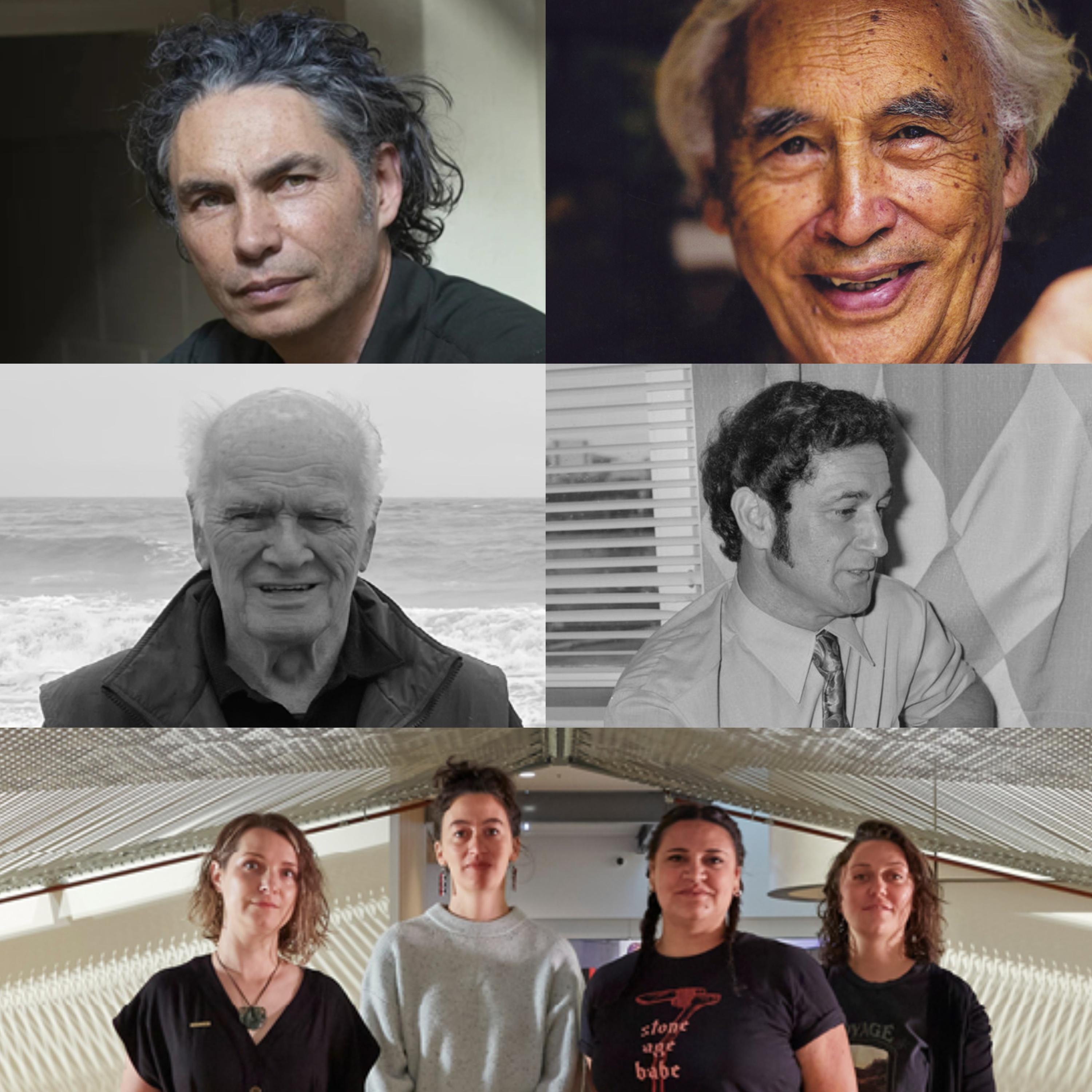
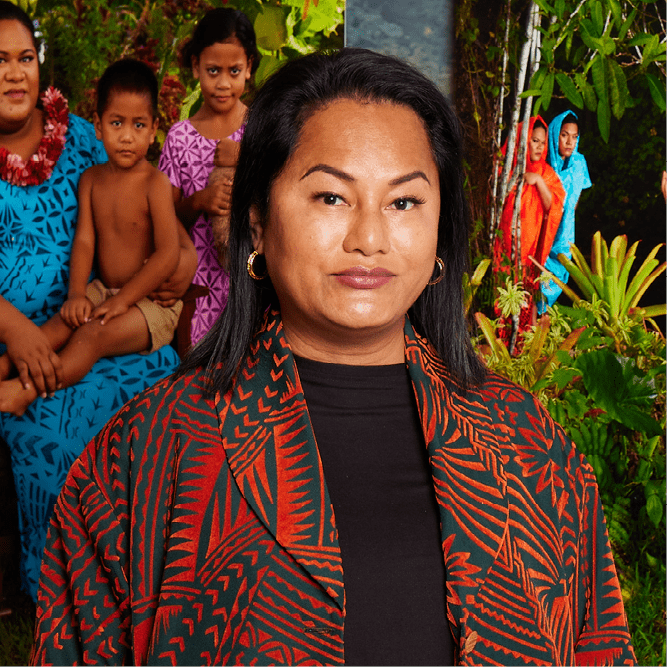
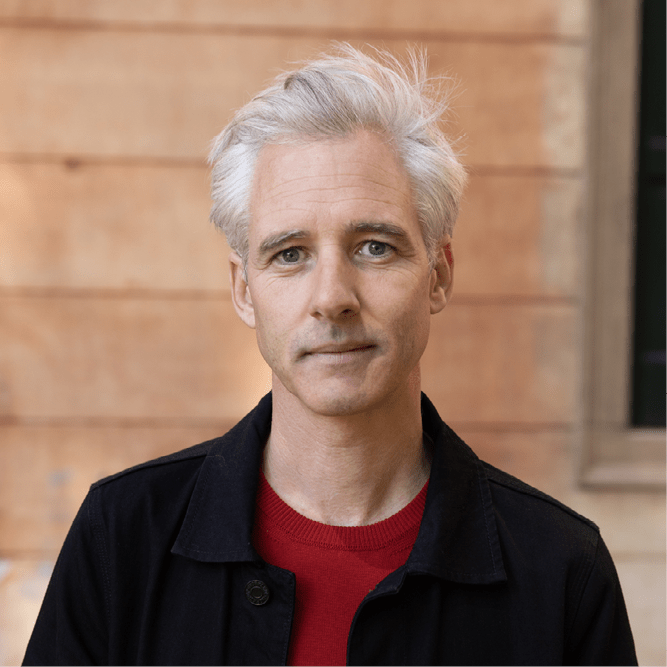
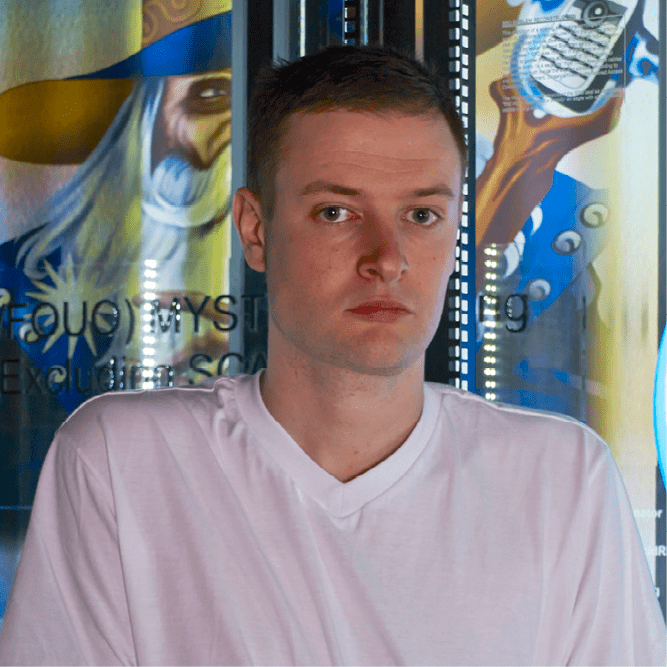
Aotearoa New Zealand is a relative newcomer to the Venice Biennale, with 2011 marking the fifth official participation. For all of the New Zealand artists whose work has been shown significant national and international opportunities have transpired, and a broadened awareness of and engagement with their work have resulted. New Zealand's presence at the Biennale, in tandem with the profiling of New Zealand contemporary art within international art fairs and curated exhibitions, is crucial to engaging audiences, curators, writers and collectors with the quality and breadth of the contemporary New Zealand art scene.


2001: The first New Zealand Pavilion: peter robinson_divine comedy

New Zealand first mounted an exhibition at the 49th La Biennale di Venezia in 2001. Two individual installations were exhibited at the Museo di Sant’ Apollonia, grouped under the title Bi-Polar; Jacqueline Fraser: A Demure Portrait of the Artist Strip Searched and Peter Robinson: Divine Comedy.


Peter Robinson

Divine Comedy

The title of Robinson’s exhibition comes from Dante Alighieri’s book Divine Comedy. The exhibition featured a series of sleek sculptures and digital prints (utilising a binary code translation of Dante’s Inferno), based around complex concepts of existence, and drew together unlikely points of reference from quantum physics to Stephen Hawking's book A Brief History of Time.


Jacqueline Fraser

A Demure Portrait of the Artist Strip Searched

fraser installationJacqueline Fraser’s intricate installation A Demure Portrait of the Artist Strip Searched involving suspended drops of Italian damask fabric which formed a maze through which visitors could explore the sculptural and text-based interventions within the maze’s interior. It was the first in a trilogy of installations that continued throughout 2001 at the Yokohama Triennale, Japan and the New Museum of Contemporary Art, New York. The two exhibitions were welcomed back to New Zealand in 2003 when they were configured for display at City Gallery Wellington Te Whare Toi. Jacqueline Fraser’s A Demure Portrait of the Artist Strip Searched is now in the collection of the Museum of New Zealand Te Papa Tongarewa and has also been shown in ‘Toi Te Papa’.

See the Press Kit for New Zealand's presence at La Biennale di Venezia in 2001.


2003: Michael Stevenson

This is the Trekka

michael stevenson

In 2003 Berlin-based New Zealand artist Michael Stevenson’s project This is the Trekka took up residence in La Maddalena church in Cannaregio (the same venue Judy Millar’s project Giraffe-Bottle-Gun occupied in 2009) to critical acclaim. In his work, Stevenson drew attention to particular historical moments by reproducing ‘artefacts’ from a series of historical case studies. The Trekka is New Zealand’s only nationally-produced vehicle. It was manufactured in Onehunga, Auckland in the late 1960s and early 1970s, with a chassis and motor imported from Czechoslovakia.

This is the Trekka investigated an attempt by New Zealand to create its own car industry, and the economic links between New Zealand and Czechoslovakia at the height of the Cold War. The exhibition used the visual language of a trade show at the time of the Trekka’s production, and included seemingly disparate components which collectively created a story about trade and nationalism. It included a wall made of New Zealand produced butter boxes and the Moniac – an historical device for recording the forces and checks of a nation’s economy through the passage of water through a complex series of valves and gates. This is the Trekka was acquired by the Te Papa Tongarewa National Museum of New Zealand and was shown in ‘Small World Big Town: Contemporary Art from Te Papa’ at City Gallery Wellington Te Whare Toi in 2005. See Press Kit for 2003.


et al the fundamental practice2005 et al.

the fundamental practice

In 2005 the collective et al. staged their richly complex installation the fundamental practice at La Pietà, iterations of which were subsequently shown at the Institute of Modern Art, Brisbane and Artspace, Auckland. the fundamental practice continued a process of research and investigation, using techniques of procedure and presentation from other ideological systems – scientific, military, political, revolutionary. The installation suggested a control-room for a diabolical plan, performing texts, provoking and alluding to the ideologies we are conditioned by and their structures of delivery’. Subsequent to et al.’s project at Venice, they were selected to mount altruistic studies within the prestigious Art Unlimited programme at Art 39 Basel 2008.

Read about et al's installation in the official Press Kit for New Zealand at La Biennale di Venezia in 2005.


2007: No official Pavilion, but the show must go on

In 2007 there was no official New Zealand presentation at Venice, instead Creative New Zealand undertook a study of international visual arts events to assist them in strategising for the future. There were two self-initiated New Zealand projects at the 52nd La Biennale di Venezia: the book, Speculation, which was published by NZ Venice Project and JRP|Ringier, and featured work by thirty New Zealand artists selected by eight curators. Over 2000 copies of the book were distributed to vernissage attendees.

Aniwaniwa by Brett Graham and Rachel Rakena was selected to be featured among the Biennale’s Collateral Events section. This elegiac and commanding work which melded sculptural forms with moving image and a haunting soundtrack was housed in an ancient salt warehouse in Dorsoduro, one of the six sestieri in Venice.  Central to the work is the theme of submersion, as a metaphor for cultural loss. Locally, Aniwaniwa refers to rapids at the narrowest point of the Waikato River by the village of Horahora, where Graham’s father was born and his grandfather worked at the Horahora power station. In 1947 the town was flooded to create a hydro-electric dam downstream. Many historic sites significant to Graham’s hapu ‘Ngati Koroki’ were lost forever. In ‘Aniwaniwa’ water as the consumer of histories becomes the vehicle by which histories are retold. In many of Rachael Rakena’s works Māori identity is explored as being in a state of flux, like the borders of a river are constantly being redefined. Likewise, water is churned into electricity; electricity is transformed into light. Light makes such a work possible, and in a sense returns to a new generation memories of a town now consumed by water’.


2009: Judy Millar and Francis Upritchard

judy millar

New Zealand’s participation in 2009 was a critical and popular success with an unprecedented number of visitors passing through the 2009 exhibitions.  114,000 visitors viewed Judy Millar’s installation, Giraffe-Bottle-Gun, curated by Leonhard Emmerling and Francis Upritchard’s installation, Save Yourself, curated by Heather Galbraith and Francesco Manacorda. Both works returned home to New Zealand in February 2010 for a four month exhibition at Te Papa Tongarewa National Museum of New Zealand.


Judy Millar

Giraffe-Bottle-Gun

Judy Millar ‘took over' the interior of the Neo-Classical structure La Maddalena, the only circular church in Venice. The largest piece in Millar's exhibition, sited in the centre of the church, was a painting in the round, bulging and intruding into the viewer's space in three dimensions. In other parts of the church oddly- shaped canvasses leant against the walls, stretching their elongated necks to the ceiling, making obvious their temporary placement in Venice and their provisional relationship with this place of worship and belief.

The generous and unusual physical dimensions of La Maddalena allowed for a full play of spatial disruptions, dislocations and inversions. A large visceral image surged and looped around the circular space, channelling the path of the viewer and establishing views and vistas around and across the architectural space. Tensions between notions of inside and outside, large and small and real and illusionistic space unfolded.

The exhibition ‘Giraffe-Bottle-Gun’ instigated a lively dispute with the venue in which it intrudes, between the great history of Venetian painting and this contemporary practice.

Since the Biennale in 2009, Judy Millar has continued to exhibit internationally, and her work in collections includes Auckland Art Gallery, Te Papa Tongarewa Museum of New Zealand, Christchurch Art Gallery, Dunedin Public Art Gallery, Kunstmuseum St Gallen, CAP Art, Dublin. Judy Millar is also represented in numerous international private collections.

Visit the 2009 nzatvenice site


Francis Upritchard

Save Yourself

francis upritchard

"I want to create a visionary landscape, which refers to the hallucinatory works of the medieval painters Hieronymus Bosch and Pieter Brueghel, and simultaneously draws on the utopian rhetoric of post-sixties counterculture, high modernist futurism and the warped dreams of survivalists, millenarians and social exiles."  Francis Upritchard

The installation Save Yourself by Francis Upritchard included clusters of figures and structures spread through the faded elegance of three chambers within the Fondazione Claudio Buziol at the Palazzo Mangilli-Valmarana overlooking the Grand Canal. Each grouping occupied an imaginary landscape from an indeterminate historical period. The figures populating these fantasy scenes are detailed with a psychedelic surface and a handmade quality.  They were searchers, dreamers, dancers; consumed by their acts of meditation or lost in reverie. The installation combined the antique and futuristic, making the scene both familiar and unsettling.  The work explored ideas about time, hope and evolutionary change and points to uncertain boundaries between high and applied art as experienced through the lavish decor of the Venetian palazzo.

Visit the 2009 nzatvenice site


Other New Zealand artists at La Biennale di Venezia

There have been other occasions when works by New Zealand artists have been selected to show within the Venice Biennale or alongside it. In 1940, paintings by Frances Hodgkins were selected for a group exhibition representing Britain, but the event was thwarted by the outbreak of WWII and the works were never despatched.

Kate Coolahan displayed works at the 39th Biennale di Venezia in 1972 and New Zealander Rosalie Gascoigne represented Australia, along with Peter Booth in 1982. Twenty-five years later, in 2007, Daniel von Sturner showed in the Australian pavilion along with Susan Norrie and Callum Morton. UK-based Boyd Webb's work was featured in Aperto 86 and Richard Killeen's work was shown as part of 20 Australian Artists, an exhibition in Campo San Stefano organised in 1990 by Sydney-based gallerist Ray Hughes.


Links

La Biennale di Venezia official site

The Exhibition of Exhibitions 1895-2005 of La Biennale di Venezia