2023 - Yuki Kihara
Yuki Kihara
Core Team Members
Commissioner: Caren Rangi ONZM
Curator: Natalie King OAM
Assistant Pasifika Curator: Ioana Gordon-Smith
Project Director: Jude Chambers
Project Publication Yuki Kihara Paradise Camp
Editor: Natalie King
Contributing writers: Yuki Kihara,
Natalie King OAM, Elizabeth Childs,
Patrick Flores, Coco Fusco, Ioana
Gordon-Smith, Jacqueline Lo, Can
Taulapapa McMullin, Reverend
Ruperake Petaia, Daniel Michael
Satele, Chantal Spitz, Ngahuia Te
Awekotuku PhD FAWMM MNZM,
Fanny Wonu Veys
Copy editor: Nikki Lusk
Design: Ashlea O’Neill, Salt Camp Studio
Publisher: Thames & Hudson Ltd
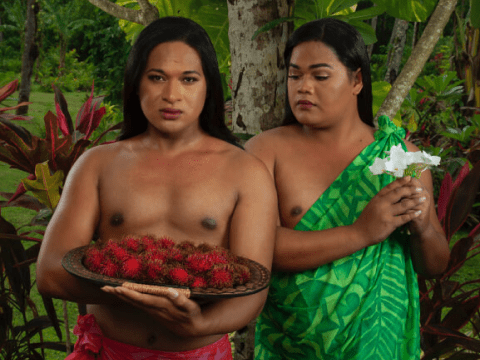
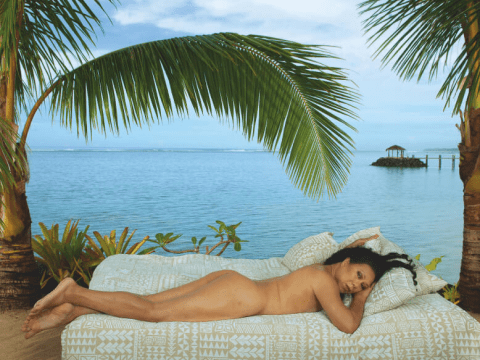
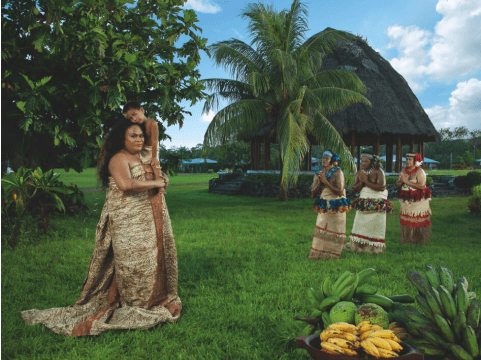
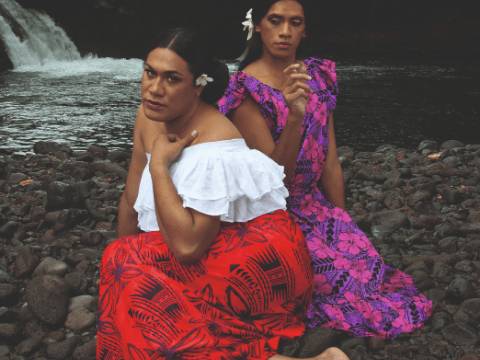
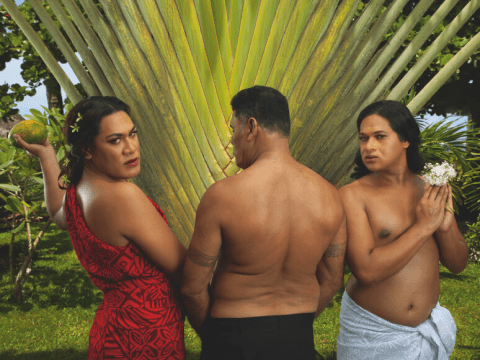
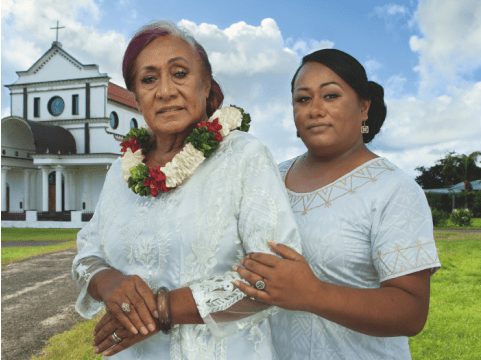
Paradise Camp comprises a suite of twelve tableau photographs in saturated colour, situated against a vast wallpaper of a landscape decimated by the 2009 tsunami. Eleven of the works were shot on location in Sāmoa, from rural villages to churches, plantations and heritage sites, with a local cast and crew of over eighty people.
Kihara’s performative photography upcycles select paintings by post-impressionist French artist Paul Gauguin in a suite of images that repurpose his paintings created during his time in the Islands of Tahiti and the Marquesas between 1891 and 1903. Kihara problematises Gauguin’s outsized legacy by re-enacting his paintings back in the Pacific, paying careful attention to the details of his works. These re-enactments instill a Polynesian inflection to each photograph and are based on strong personal relationships with Kihara’s sitters, all of whom are part of the Fa‘afafine and Fa‘atama communities. Kihara works with these models to represent her own vision of Paradise, redirecting the viewer to the concerns of contemporary Pacific Islanders and ‘returning the gaze’ in a profound gesture of empowerment.
More on the artist
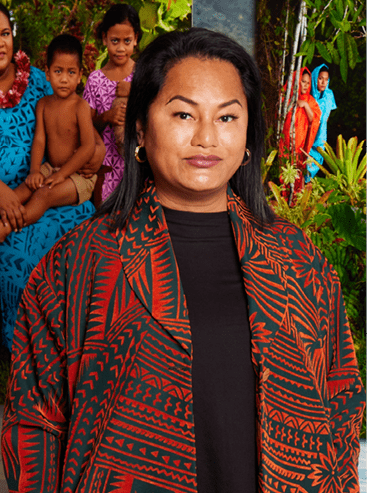
An interdisciplinary artist of Japanese and Sāmoan descent, Yuki Kihara’s work interrogates and dismantles gender roles, (mis)representation and colonial legacies in the Pacific. She was the first Pasifika, Asian and Fa’afafine (Sāmoa’s ‘third gender’) artist to represent Aotearoa New Zealand at la Biennale di Venezia.
Kihara’s performative photography upcycles select paintings by post-impressionist French artist Paul Gauguin created during his time in the Islands of Tahiti and the Marquesas between 1891 and 1903. Kihara problematises Gauguin’s outsized legacy by re-enacting his paintings back in the Pacific, paying careful attention to the details of his works. These re-enactments instill a Polynesian inflection to each photograph and are based on strong personal relationships with Kihara’s sitters, all of whom are part of the Fa‘afafine and Fa‘atama communities. Kihara works with these models to represent her own vision of paradise, redirecting the viewer to the concerns of contemporary Pacific Islanders and ‘returning the gaze’ in a profound gesture of empowerment.